
'It beggars belief that Saudi Arabia would deploy military force against India, a top partner and market.'

'The flip side of this is that he won't hesitate to call out India if he thinks its policies are hurting US economic interests or border US foreign policy goals.'

Trump has made it clear: the US will not lift its blockade of Iranian ports until a deal is signed.

'The White House lunch that Trump hosted for Munir last year came just after Munir returned from a visit to Iran, at a moment when Israel and Iran were at war.' 'Trump said after that lunch that the Pakistanis know Iran very well. He likely views Munir as a useful interlocutor that can give helpful insights on Iran.'

Karex, the Malaysian company that makes roughly one in five of the world's condoms -- about five billion a year, supplying Durex and Trojan among others -- announced this week that it is raising prices by up to 30 percent. The reason is the Strait of Hormuz.

'The next two to three weeks will not be decided in Washington.' 'They will be decided in Tehran, in whatever calculation Iran makes about the costs of continued resistance against the costs of appearing to have yielded.'

The intriguing bit is that Trump is likely to attend the talks in Islamabad this weekend -- if he does, it will be the clearest signal yet that the US is ready to exit the war with some sort of win to show, since he cannot afford to go for the talks and return empty-handed, notes Prem Panicker in his must read blog on the Iran War

The question is no longer whether the war will expand. It has. The next few days will tell us whether the war stabilises around Hormuz or whether the Strait itself becomes the trigger for a far larger rupture. What to watch for over the next 48 hours is simple: Any move by the US toward direct naval control of the Strait; any credible Iranian attempt to disrupt or mine shipping lanes and, critically, whether energy infrastructure in the Gulf continues to be targeted.If those lines are crossed in tandem, the war will no longer be containable within the region.

'I suspect that Bangladesh being given permission stuck in India's official craw, and this story was an attempt to balance the scales by giving the impression that a similar waiver had been given to India as well.'

Iran is fighting a different war: Older, slower, and in some ways more dangerous. Iran doesn't need to shoot down an F/A-18. It only needs to make the Strait of Hormuz feel dangerous long enough for insurance markets, shipping companies, and oil futures traders to do the rest. Prem Panicker continues his must-read daily blog on the war in the Middle East.

Shikha Bhatnagar's recent appointment as Associate Director of the South Asia Center of the Atlantic Council, is yet another manifestation of a growing trend of second generation Indian Americans' advent into leading Washington, DC think tanks as senior policy analysts and associates.
Former Pakistan President Pervez Musharraf has expressed his bitter resentment toward United States President Barack Obama and his administration for developing a strategic partnership with India while using Pakistan only for its strategic convenience. While speaking at the Atlantic Council, a Washington, DC-based think tank, Musharraf lashed out against Obama's decision not to visit Pakistan during his recent visit to Asia.
Former Pakistan President Pervez Musharraf has expressed his bitter resentment toward United States President Barack Obama and his administration for developing a strategic partnership with India while using Pakistan only for its strategic convenience. While speaking at the Atlantic Council, a Washington, DC-based think tank, Musharraf lashed out against Obama's decision not to visit Pakistan during his recent visit to Asia.
Shuja Nawaz, arguably the most authoritative expert on the Pakistani military, assesses the US-Pakistan strategic dialogue.
'This is in its own interest.' 'Only the State must have the monopoly of power in the country.'
'Militias have no place in democracies,' says Shuja Nawaz, Distinguished Fellow at the Atlantic Council, the Washington, DC-based think-tank.
Trump's sweeping tariffs and penalties on China-built ships have turned global shipping into the front line of economic war, observes Shyam G Menon.

The National Security Strategy document should flag all major issues concerning security strategy and provide guidelines to concerned departments to work out suitable action plans. Since the global and regional geopolitical canvas is dynamic, the NSS document should be deliberated at length before formulation and should be reviewed periodically, recommends Commodore Venugopal Menon (retd).
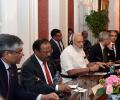
Prime Minister Narendra Modi met representatives of several prominent American think-tanks on Monday -- his last engagement of the day -- to understand how they look at global trends and challenges and what India and the US can do together for the world.

They warned that Islamabad wants to send a 'strong message' to India against isolating it on the world stage.

India's failure to resolve the Kashmir issue and improve relationship with Pakistan has been an "impediment" to India's rise and become the greatest hurdle in it becoming a permanent member of the UN Security Council and the Nuclear Suppliers Group, Pakistan Prime Minister Nawaz Sharif's envoys have claimed.
The US president previously offered to mediate between India and Pakistan, a proposal rejected by New Delhi which maintains that there is no role for any third party in bilateral issues.

'In this regard, the future stability of Pakistan remains a wild card,' said the report.
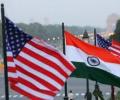
Exports to India support 180,000 US jobs.
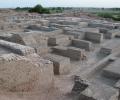
"South Asian studies" academics in the US would do well to introspect how they wittingly or unwittingly become part of Pakistan's proxy war in wielding influence over academics and policy, says Sankrant Sanu.
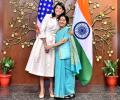
External Affairs Minister Sushma Swaraj and her American counterpart Mike Pompeo have agreed to reschedule the postponed '2+2 dialogue'.

The further expansion and upgrade of the Chinese military does not augur well for India, which continues to confront an increasingly belligerent China on its borders, notes former foreign secretary Shyam Saran.

'Clearly, from the Indian viewpoint, the US retrenchment from Asia cannot be happening as good news.' 'The abandonment of the US' pivot to Asia exposes the US-Indian partnership to be a mere transactional relationship,' says Ambassador M K Bhadrakumar

In a powerful signal to New Delhi that the United States is a reliable defense partner, Senators Mark Warner and John Cornyn introduced US-India Defense Technology and Partnership Act in Senate

The minister has sought the help of US technology, expertise and innovation to make road safety a priority in India.
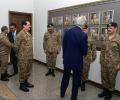
'Both India and Pakistan are now, for the first time in history, very closely allied and connected with the US -- economically and politically.'

Indians at large harbour a notion that their country is cherrypicking out of the American basket of goodies, but the policymakers in Delhi and the political leadership are well aware that it can only be a pipe dream since a military alliance with a superpower is a profound irrevocable commitment, observes Ambassador M K Bhadrakumar.

The elephant in the room will permeate the conversations, predicts Rup Narayan Das.

'It is a tense border and there are numerous elements that keep these tensions alive.' 'India is willing to militarily respond if provoked.'

Notwithstanding how the current impasse is solved, at some point in the future, Russia will realise that just as centuries ago it developed the paradigm of securing its heartland's safety through annexing vast buffer zones between itself and the enemy, a more modern security is possible only through friendly relations and sustainable peace, observes Shyam G Menon.
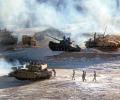
India's national security strategy needs to be revised periodically since the global and regional geopolitical situation is dynamic, points out Commodore Venugopal Menon (retd).

'It is unrealistic to expect that security dilemmas and strategic distrust to disappear or even diminish any time soon,' says Rup Narayan Das.
'The days are gone when we only deal with India as the other side of the Pakistan coin or Pakistan as the other side of the India coin.'

'The optimistic advice might be "fasten your seat belts" and the pessimistic one might just turn out to be "brace for impact",' says Claude Smadja.

Chanda Kochhar is among the three Indians in Time's Most Influential list.
